This site is under construction. Please have a look through the site and leave any feedback or suggestions.
Snakes are a very diverse and successful group of animals which have developed remarkable adaptations enabling them to inhabit a vast array of environments. Unfortunately a combination of negative publicity and general lack of knowledge about snakes have given way to many misconceptions causing an unwarranted fear of these animals. Snakes are shy by nature and will only bite if they feel threatened and subsequently most snakebites occur when people try to catch or kill them. We can all help reduce the incidents of snakebite by treating these animals with respect and not approaching them in the wild.
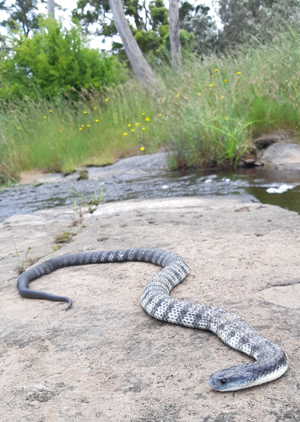
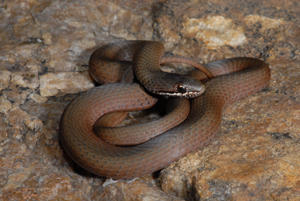
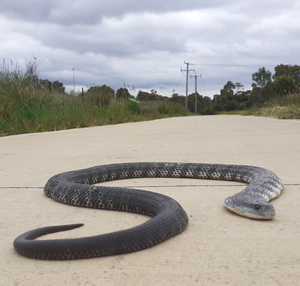
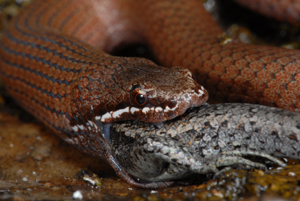
There are around 150 species of snakes found throughout Australia, the majority of which live in the warmer parts of the continent. This website is intended as a guide to enable residents to become familiar with the main species of snakes found in their local area. The information contained in this website is limited and consequently should not be relied upon for making a positive identification of a snake without first consulting a recognised field guide.
The use of common names to differentiate between species creates confusion due to the fact that a single species may have many different common names. For this reason the scientific name of each species has been incorporated to eliminate any confusion.
The Story of Ram Chandra
by Jake Maggi
Year 1 Ulladulla Public School
Ram Chandra was born in Grafton in New South Wales in 1921. His birth name was Edward Royce Ramsey. He changed his name to Chandra when he started working as a snake handler in sideshows and carnivals: “The Taipan Man and the Pit of Death”. He also worked as a railway worker and owned a laundromat.
Ram Chandra is famous for researching, handling and promoting awareness of the Taipan. He was the driving force and key to the development of the Taipan antivenin in 1955. He also surveyed and recorded the distribution of the Taipan in Australia to allow for the correct distribution of the antivenin in Australian hospitals.
Ram Chandra was bitten by several snakes throughout his likfe; all of which were successfully treated with anitivenin. However, over time, the venom attacked his nervous system and in 1965 he became paralysed from the waist down. This disability did not stop his work on the Taipan and he continued to research, handle and educate people everywhere about the world’s deadliest snake – The Taipan.
Ram Chandra is not only responsible for the accurate survey of Taipan anitivenin, he was tireless in this dedication to research and education about this deadly snake. 40, 000 people worldwide are killed by snakebites; mostly due to a lack of understanding about venomous snakes.
Ram Chandra helped change peoples’ attitude about the Taipan. He risked his life handling Taipans to help mankind. He was recognised for his work in 1975 when he won the British Empire Medal in the Queens Birthday Honors. In 1995 he was awarded the Order of Australia Medal. Ram Chandra features in the Australia Hall of Fame as one of Queensland’s unsung heroes. In 1982, he received the Australia Day Award called the Pioneer Shire citizen of the year. He died at the age of 77 in 1998. Ram is survived by his wife Nolear and his 11 children.
To produce the antivenin, scientists milk venomous snakes by gently squeezing the cheeks to force the venom sacs to release their deadly fluid. A small amount of venom is injected into a big animal that won’t be killed by it – usually a horse. The horses body then creates antibodies in its blood to fight the venom. The venom fighting blood of the horse can then be drawn with a needle and purified into antivenin.Antivenin is composed of already made antibodies that can be injected into a snake bite victim and deactivates venom molecules.
There are around 150 species of snakes found throughout Australia, the majority of which live in the warmer parts of the continent. This website is intended as a guide to enable residents to become familiar with the main species of snakes found in their local area. The information contained in this website is limited and consequently should not be relied upon for making a positive identification of a snake without first consulting a recognised field guide.